What does it mean to be right-brained? How about creative? Sees in pictures? Expert in visual-spatial relations?
Here are other ways students who are right-brained learn:
- They use feeling
- They are ‘Big picture’ oriented
- They understand symbols and images
- They love Philosophy and religion
- They easily grasp object function
- They dream up possibilities
- They will take risks
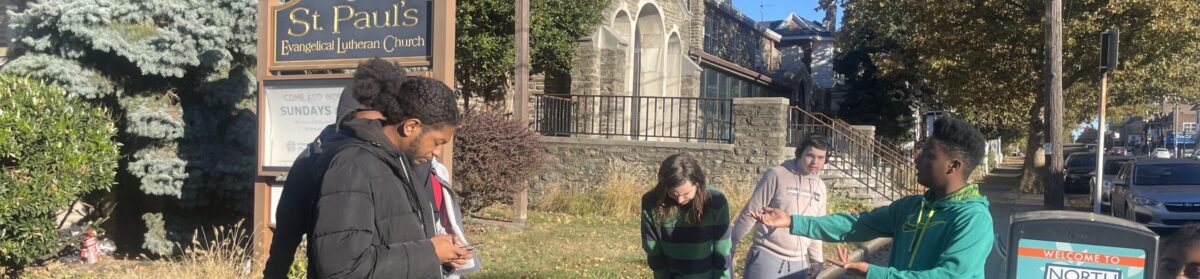
At Sophia Academy, we do our best to teach the way our students learn. Want to know and understand the relative scale of the earth-moon size and distance? We let others read about it in a book. We will “guess” which ball best represents the earth and the moon. 
Once we guess and discuss, we need to see if we are right. We use the math we learn in the morning to help us figure out the diameter of each ball from the circumference that we measured. Which two balls have the ratio closest to that of earth and moon? It turns out it was the basketball and the baseball.
Then we have to figure out how far apart they are. If the earth is a basketball and the moon is the baseball, what distance best represents their true distance? After class discussion, we decided 3-4 feet. Were we right? Ask a Sophia Academy student for the answer.

 yle of building in the Philadelphia area. Since it is not enough to learn plate tectonics or the rock cycle from a book, our latest field trip took us to the Wissahickon Valley for a hike through geologic time. Students climbed on some of the oldest rock on earth (Baltimore Gneiss), inspected garnets trapped in rock, felt the difference between talc and surrounding magnetite, identified rock folds and outcrops, and were thrilled to find out that dynamite is used to quarry huge blocks of granite. Using their bodies and their hands to make sense of geology, students will better remember lessons on plate tectonics, rocks, and weathering.
