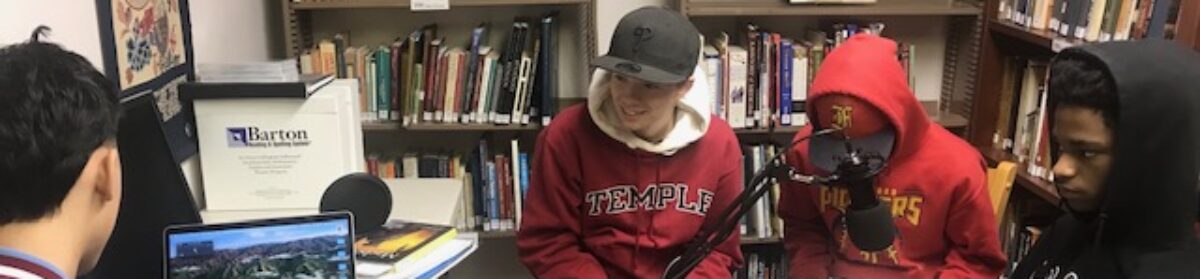
While speaking with parents and potential students at the GreatPhilly Schools Fair (#phillyhsfair), we were reminded of why we have all our 9th graders take a class in Chair Caning: it provides a way for them to use their hands, often their strongest mode; it prepares them for the future with a bankable skill; it is fun. Good reasons all. But here’s the best reason: weaving a cane seat through all seven steps requires every student to “cross the midline.”
So what, you say? Ah, but listen well to occupational therapist, JJ Schweikert, who explains that
“When we perform activities that cross the midline of our body, these movements are helping build pathways in the brain that are extremely important for various skills such as gross motor, fine motor and cognitive skills. All movement requires a sense of balance. When the equilibrium is deficient, it can affect how we sit and may produce an increase in fidgeting and restlessness. Poor midline skills can also cause the learner to have scattered attention. Movements that cross the midline are important for fine motor skills, directional skills (such as up, down, left and right) and for interpreting symbols (such as letters or numbers).
In other words, Sophia Academy requires Chair Caning because it makes our brains grow smarter and work better. Since research shows a strong connection between dyslexia and midline crossing deficiency, we’re all about crossing the midline.
 We focus on executive function skills in all of Sophia Academy’s classes: the ability to plan, organize, categorize, achieve, and so on. But, according to the Center on the Developing Child at Harv are University, there are many things parents can do at home to help teens acquire more robust executive function skills. Among these are
 complete by the second week of September. Classrooms that are bright, airy, and painted a calming light yellow have had an obvious impact as students have thrown themselves willingly into work as varied as Latin and Logic, Government and Geometry.
